Blog ·
The Case for One-Question Surveys
Every question you add costs you answers. Why asking one thing at a time produces more replies, better data, and decisions you can actually make.
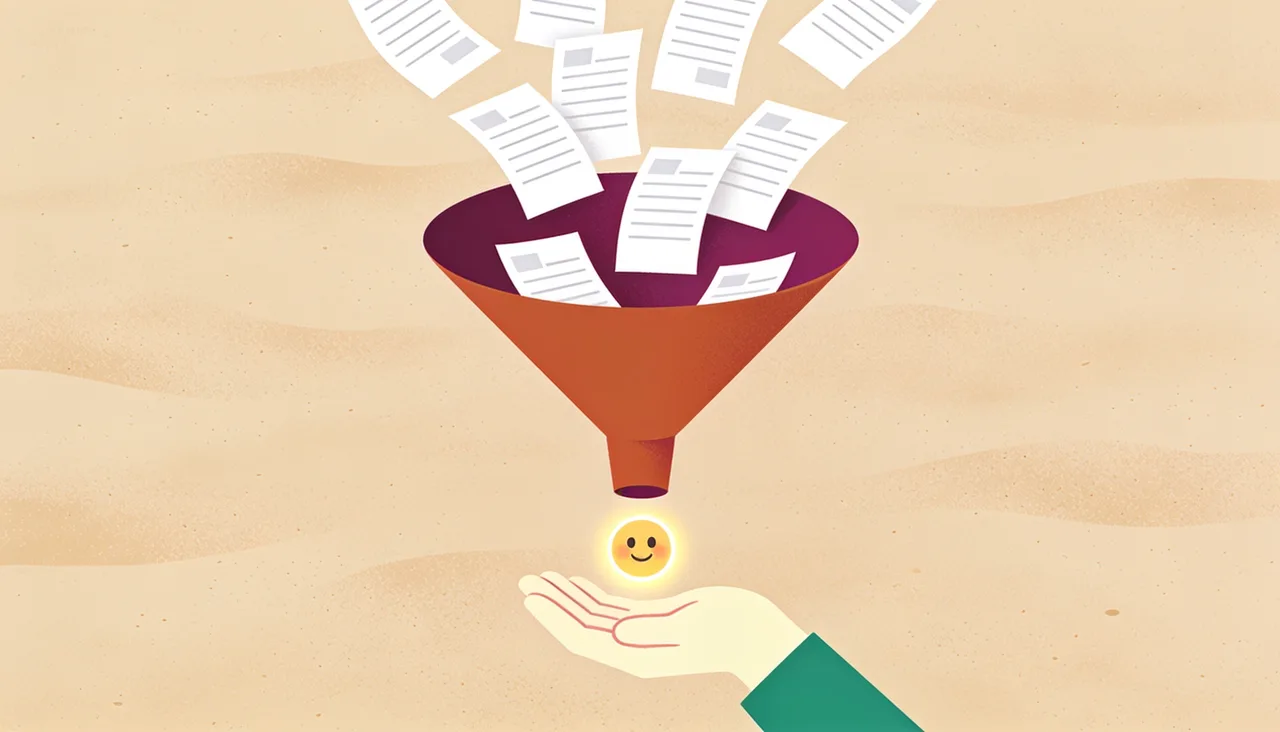
There is a moment in every survey design meeting where someone says, while we are at it, can we also ask about X? That sentence is where response rates go to die. The survey grows from one question to four to eleven, each addition reasonable on its own, and the result is a form that serves five stakeholders and zero respondents.
Every question is a toll
Think of attention as a toll road. The first question is cheap: people will tap an emoji while waiting for coffee. The second question doubles the price. By the fifth, you are only collecting answers from people with unusual patience or unusually strong opinions, and your data quietly stops representing your audience. The shape of who answers changes with every question you add, which is a polite way of saying the data gets worse while looking bigger.
One question forces a decision
The discipline of one question is mostly a gift to you, not the respondent. It forces the only conversation that matters: what do we actually need to know right now? If the answer is how do people feel about the new checkout flow, ask that. Next month, ask something else. A sequence of single questions over time beats a single questionnaire, because each answer is attached to a moment and a context instead of being averaged into a blur.
One question also produces data you can act on. When a twelve-question survey comes back mediocre, the follow-up meeting is an argument about which question mattered. When one question dips, everyone in the room knows exactly what moved.
But I need more detail
Sometimes you do. The trick is to make detail optional rather than mandatory. A one-tap rating followed by an optional comment box gets you both: everyone contributes the score, and the people with something to say write it down. In practice the comments that arrive this way are better than forced free-text answers, because only motivated people write them.
Rotation: many questions, one at a time
If you genuinely have four things to track, rotate them. Ask one question this week, the next one next week, and cycle. Over a month you cover everything a questionnaire would, but every individual ask stays one tap. This is how weekly check-ins stay fresh for months: week five never feels like week one, because it is literally a different question.
The summary fits in a sentence: ask less, learn more, more often. People answer surveys the way they answer doors. One knock, they open. Twelve knocks, they pretend not to be home.